


There is something about fall in the North Carolina mountains that seems to bring out the cabin dream. Maybe it is the first cool morning. Maybe it is the thought of a fire in the fireplace, leaves outside the windows and eventually a little snow on the deck.
And sooner or later, someone sends us a listing and says, “This. This is the kind of log cabin I want.”
Except sometimes... it isn't actually a log cabin.
Around the High Country, you'll see everything from true log homes and timber-frame construction to houses with log siding, tongue-and-groove interiors, exposed beams and regular wood framing underneath it all.
They can look almost identical in listing photos.
But how a home is actually built matters — especially when you're thinking about inspections, maintenance, repairs and what you're really buying.
So, what exactly makes a log cabin a log cabin?
What Makes a True Log Home?
In a true log home, the logs themselves are part of the structure of the house.
Those exterior log walls aren't simply decorative material attached to another wall. They're doing the actual work.
That doesn't mean every true log home looks like Abraham Lincoln should be standing outside. Log homes can range from very rustic cabins to large, beautifully finished mountain homes.
But from a buyer's standpoint, the important distinction is that you're dealing with actual log construction.
That means we want to pay particular attention to the condition of the logs, staining and sealing, moisture, areas where water may collect, and any signs of insects or rot.
And one thing that surprises some buyers: that beautiful log exterior does require ongoing care. Restaining and resealing are part of owning a log home, and they're real maintenance expenses to plan for — not something to discover later.
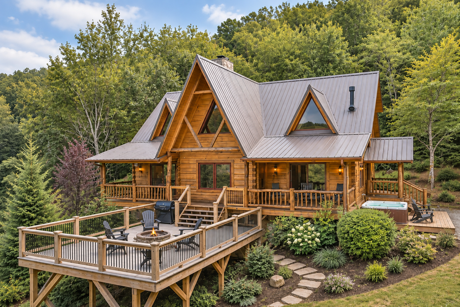
In a true log home, the logs you see on the outside aren’t just decorative — they’re actually part of the structure of the house.
What Is a Timber-Frame Home?
This is where buyers often get fooled by the photographs.
A timber-frame home may have those beautiful massive beams everyone associates with a mountain lodge, but the timbers are the skeleton holding the house up. The walls between them are filled in with other materials.
That creates those big open interiors, soaring ceilings and exposed wood beams that many buyers are actually picturing when they say they want a “cabin.”
And honestly, sometimes we'll talk to someone who insists they want a log home, only to realize after looking at their favorite examples that what they really love is timber framing.
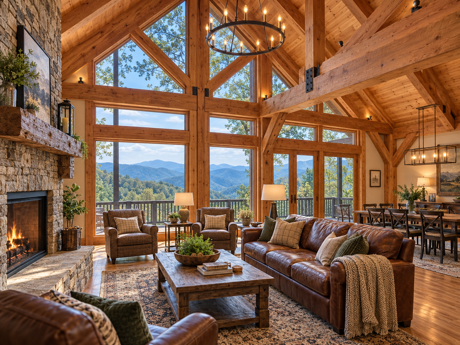
Here, the large exposed timbers are part of the home's structure, but the walls themselves aren't made from stacked logs.
What About a House With Log Siding?
Here's another one that can fool you from the driveway.
Some regular wood-framed houses have log siding added to the exterior.
From twenty feet away — and definitely in MLS photographs — they can look just like a full-log home.
Underneath, however, the house may be framed much like any other wood-framed home.
That isn't inherently better or worse. It's simply different, and buyers should know which one they're purchasing.
If you love the appearance of a log cabin but aren't necessarily committed to full-log construction, a log-sided home may actually give you exactly the look you're after.
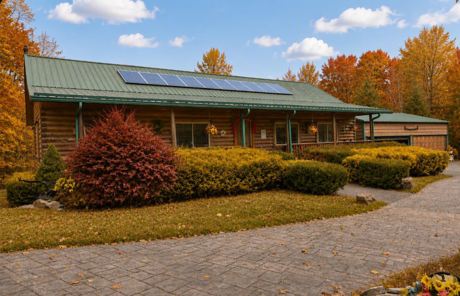
From the outside, this home has the classic cabin look — but the rounded logs you see are siding rather than the structural walls of the house.
And Then There Is Tongue-and-Groove
Tongue-and-groove wood shows up everywhere in mountain houses.
Walls. Ceilings. Porch roofs. Great rooms. Bedrooms.
And a house covered in beautiful tongue-and-groove pine can look extremely “cabiny” inside.
But tongue-and-groove is a finish, not a type of construction.
A regular wood-framed house can have enough wood inside to make you swear you're standing in a cabin.
Again, that's why photographs alone don't always tell the whole story.
The Cabin That Is Really a Conventional House
This may be one of the most common things we see.
Stone fireplace. Exposed beams. Wood ceilings. Big porch. Maybe cedar or rustic-looking siding outside.
Everything about it says mountain cabin.
Structurally? It may simply be a regular wood-framed home.
And there is absolutely nothing wrong with that.
In fact, for some buyers, this is exactly what they really want: the warmth and character of a cabin without necessarily owning a full-log home.
That's why we try not to get too hung up on what the listing calls it.
“Cabin” can describe a feeling almost as often as it describes a construction method.
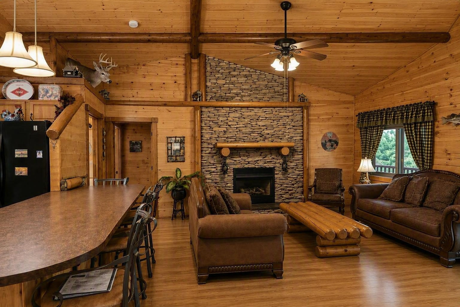
This is the interior of the log-sided house above — a great example of how a home can look like a cabin outside while being clearly conventionally framed inside.
Some Mountain Homes Are a Little Bit of Everything
And because mountain houses apparently enjoy making this complicated, sometimes the answer is:
a little bit of everything.
You may find regular wood framing combined with timber-frame elements, log siding on part of the exterior, tongue-and-groove throughout the interior and exposed structural beams in the great room.
Older homes may also have additions or renovations built differently from the original structure.
That's when understanding the individual house becomes much more important than finding the perfect label for it.
So How Do You Tell What You Are Looking At?
Sometimes it's obvious.
Sometimes it absolutely isn't.
The MLS description and seller disclosures may give us clues. Building plans, permits or information from the owner may help. Sometimes the corners of the house, an unfinished area or even the crawlspace tells us more than the listing photos do.
And once you're under contract, we want an inspector who understands the type of mountain home we're actually dealing with — especially if it's true log construction.
The important thing isn't winning an argument over whether something deserves to be called a “cabin.”
It's knowing how the house is built and what that means for you as the owner.
The Better Question May Be: What Do You Love About Cabins?
When buyers tell us they want a log cabin, we usually start asking a few more questions.
Is it the actual log walls you love?
The big exposed beams?
Lots of wood inside?
A stone fireplace?
A covered porch?
The rustic exterior?
Privacy and trees?
That warm mountain feeling when you walk through the door?
Because once we know which parts of the cabin dream actually matter to you, your options may get much bigger.
You might discover that the perfect property isn't technically a log cabin at all.
And that's perfectly okay.
Looking for a Cabin in the NC High Country?
Whether you're looking for a true log home, timber-frame construction or simply a mountain house with the warmth and character of a cabin, you'll find all of them throughout Boone, Blowing Rock, Banner Elk and the surrounding High Country.
The trick is knowing what you're looking at — and making sure the house you fall in love with works for the way you actually want to own and use it.
Browse Log Cabins for Sale in the NC High Country →
Not sure whether the home you’re looking at is true log construction, log siding, timber frame — or a little bit of everything? Give us a call at (828) 263-6235. We’re happy to help you sort through the details and find the kind of mountain home you actually have in mind.