


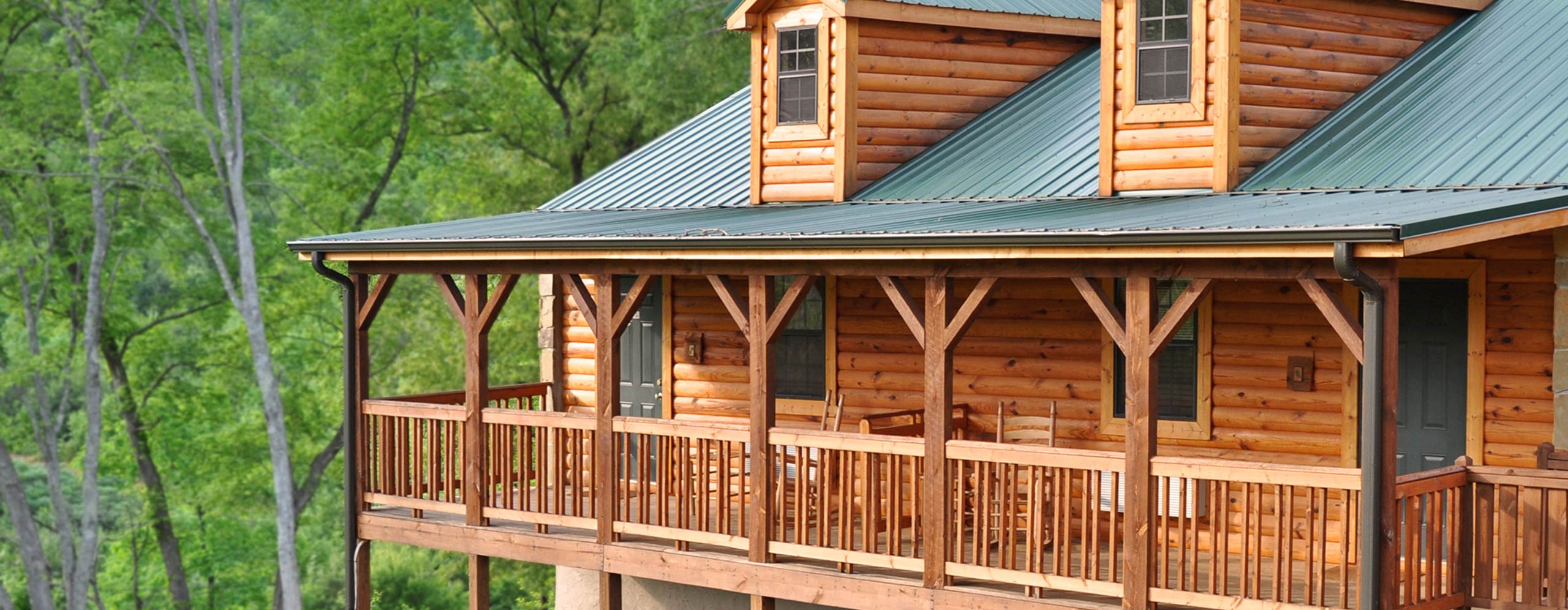
There’s something about a log cabin in the North Carolina mountains that just feels right.
The wood, the stone fireplace, the big porch, maybe a creek nearby or a long-range mountain view — it’s pretty easy to picture yourself settling in with a cup of coffee and deciding you never need to leave.
Then comes the practical question:
How much work is it to maintain a log home?
We recently had a buyer ask us exactly that while looking at a cabin in the High Country, and it’s a good question.
The short answer is that a properly maintained log home doesn’t have to be a maintenance nightmare. But log construction does require some different care than a conventionally sided home, and deferred maintenance can become expensive.
Here are some of the things we think buyers should understand before falling completely in love with the view.
The Exterior Finish Matters
One of the biggest differences with a log home is that the exterior wood itself is exposed to the elements.
Sun, rain, wind and moisture gradually wear on the finish protecting the logs, so staining and sealing aren’t simply cosmetic. They help protect the wood underneath.
How often a log home needs attention varies considerably depending on the type of finish, exposure, elevation, weather and even which side of the house you’re looking at. Industry maintenance guidance recommends watching for fading, peeling, cracking, water staining and other signs that the finish is beginning to fail rather than relying solely on a calendar.
A sunny, exposed wall may weather differently than one tucked beneath a deep porch or surrounded by trees.
That’s one reason we’d rather see evidence of regular maintenance over time than hear that a seller had the house stained once ten years ago and hasn’t thought about it since.
Water Is One of the Biggest Things to Watch
Logs and persistent moisture are not friends.
Good roof overhangs, functioning gutters and downspouts, proper drainage and enough separation between landscaping and the house can all help keep water away from the logs.
When looking at a log home, we pay particular attention to areas around windows and doors, exposed log ends, lower courses of logs and places where water may repeatedly splash or collect.
Darkened or discolored wood doesn’t automatically mean there’s a serious problem, but soft wood, ongoing moisture or deterioration deserves a closer look. Log-home maintenance guidance specifically recommends inspecting for water staining, softened wood and areas exposed beyond roof overhangs.
And in the mountains, this becomes especially important on homes surrounded by dense trees or situated on shaded lots where things may stay damp longer.
What About Chinking and Caulking?
Depending on how a log home was built, you may see chinking or specialized sealants between logs and around windows, doors and other openings.
Those materials help keep out air and water, but they should be inspected periodically for gaps, cracking or separation.
This isn’t necessarily a red flag — homes move, materials age and maintenance happens.
What matters is whether small issues have been addressed before they become bigger ones. Industry inspection guidance recommends checking sealant joints around log interfaces, windows, doors, rooflines and other potential water-entry points.
Yes, Bugs Like Wood Too
Welcome to the mountains. We have wildlife.
Sometimes very small wildlife.
Carpenter bees, carpenter ants, termites and wood-boring insects are among the things log-home owners may encounter. That doesn’t mean every little hole is a catastrophe, but buyers should look for evidence of active insect damage and find out how the home has been treated and maintained.
A well-maintained exterior finish can also make the wood less inviting to some pests such as carpenter bees.
If we see something questionable during a showing, that’s a good reason to bring in someone who knows what they’re looking at rather than trying to diagnose it from the porch.
Mountain Location Can Affect Maintenance Too
Two nearly identical cabins can have very different maintenance histories simply because of where they sit.
A high-elevation home exposed to wind, snow and strong sun may weather differently than a cabin tucked into a protected wooded hollow.
Likewise, a shaded north-facing wall may stay damp longer, while a south- or west-facing wall may take more punishment from the sun. Industry inspection guidelines specifically recommend paying extra attention to walls with greater sun and weather exposure.
That’s why we don’t love blanket statements like, “Log homes need to be stained every X years.”
The house will usually tell you more than the calendar will.
How Can You Tell If a Log Home Has Been Well Maintained?
This is probably the more useful question for a buyer.
Some things we like to see include:
-
An exterior finish that appears generally consistent and well cared for
-
Chinking and sealants that appear intact
-
Gutters and drainage directing water away from the house
-
Generous roof overhangs protecting the logs
-
Landscaping and soil kept away from direct contact with the wood
-
No obvious soft areas or significant deterioration
-
Maintenance records or information about when exterior work was last completed
Things that might make us want to investigate further include heavily weathered or peeling finishes, pronounced water staining, soft or deteriorating wood, obvious insect activity, failed sealants or logs repeatedly exposed to ground moisture.
None of those observations by themselves replace an inspection.
They simply tell us where we may want to ask more questions.
Get an Inspector Who Understands Log Homes
This is a big one.
If you’re seriously considering a log home, we’d prefer to have it inspected by someone familiar with log construction whenever possible.
A general home inspection is important, but log homes have some construction and maintenance issues that someone who regularly sees them may recognize more readily.
The same applies if the home appears to need restoration or substantial exterior maintenance. Getting an opinion from a contractor experienced with log homes can give you a much clearer idea of what you’re taking on.
So, Are Log Cabins High Maintenance?
They can be — if maintenance has been ignored.
But that isn’t quite the same thing as saying log homes are inherently problematic.
A well-built log home with good roof protection, good drainage and an owner who has stayed ahead of exterior maintenance can be a very different proposition from one that has spent years with failing finish and moisture getting into the wood.
And that’s really the point.
When buying a log cabin, don’t just look at whether you love the logs.
Look at how those logs have been cared for.
Because the fireplace, mountain view and big porch may be what makes you fall in love with the house — but understanding its maintenance history can help make sure you still love it after you own it.
Looking for a Log Cabin in the NC High Country?
You’ll find log homes and cabin-style properties throughout Boone, Blowing Rock, Banner Elk, Valle Crucis, Todd, Fleetwood, West Jefferson, Beech Mountain, Sugar Mountain and the surrounding North Carolina High Country.
And remember: not everything buyers call a “cabin” is actually full-log construction. There are also log-sided homes, timber-inspired properties and conventional homes that deliver the same mountain feel with different maintenance considerations.
Browse log cabins and mountain homes for sale in the NC High Country →
If you find one you love, Marc and Kathie Childers with Childers Realty Group can help you look beyond the photos and start figuring out what questions to ask before you buy.